Philippe Aghion: a graduate of the École Normale Supérieure crowned with the Nobel Prize
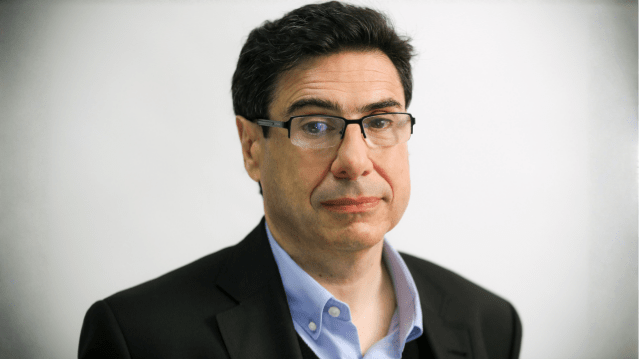
A graduate of the École Normale Supérieure (Mathematics, 1976) and a brilliant economist, Philippe Aghion is the co-recipient of the 2025 Nobel Prize in Economics. This highest recognition crowns a lifetime of research driven by a deep conviction: economic growth must be the engine for building a more socially balanced society.
A few months after receiving his Nobel Prize, Philippe Aghion is still deeply moved when sharing the memory of an “extraordinary ceremony, one that marks you for life, in the presence of all the people who made that moment possible.” For him, the Prize is the culmination of a long process: “in one week, everything that had worked well in my career fell back into place.”
“Changing growth theory to lift people out of poverty”
Growth, industrialization, innovation
Philippe Aghion has profoundly renewed modern economics and the way it is taught. Author of publications and books that have shaped the discipline, he focuses on economic growth and the role of innovation, showing in particular how it can both widen inequalities and promote social mobility, depending on the educational, fiscal, and industrial policies that accompany technological change. While he denies influencing public policy — “that is not for me to say” — Philippe Aghion nevertheless states: “still, we hope that our ideas can have influence, but History will judge whether or not we helped change things.”
For an industrial policy on AI
A member of the Circle of Economists, Philippe Aghion is also co-chair of the Generative Artificial Intelligence Committee, created by the government in 2023. “An industrial policy for AI is an absolute priority,” he states. The Nobel Prize winner says he speaks frequently with Mario Draghi, former president of the European Central Bank and author of the report bearing his name. “We debate Europe’s technological decline compared with the United States. If I can contribute to the role France can play in Europe’s recovery, I will be very happy,” he confides. Europe has the advantage of having a social model closer to the Scandinavian model, which should soften the shock. “Our institutions must enable us to succeed in this revolution and make it socially acceptable.”
ENS Paris-Saclay: excellence and simplicity
“In reality, I was highly motivated by economics because of political commitment,” declares Philippe Aghion. “Economics is connected to society, therefore to politics. Being a communist activist at the time, I wanted to understand economics in order to help make the world better.” Yet it was indeed through the mathematics entrance exam that he was admitted to ENS Paris-Saclay in 1976. The School allowed him to simultaneously pursue a course in applied mathematics for economics at Paris 1 University, where he defended his thesis in 1983.
At ENS Paris-Saclay, Philippe Aghion acquired “a solid mathematical foundation” from “excellent mathematicians,” such as Francis Hirsch, Alain Connes, and Jean-Michel Bony. The graduate also remembers the political fervor that then reigned on the Cachan campus in the turbulent context of the breakup of the left-wing alliance. “In 1978, with classmates — some of whom I met again decades later at the Collège de France — we invited Georges Marchais, deputy for Val-de-Marne and secretary of the Communist Party,” he reveals.
Philippe Aghion also sometimes meets other prestigious alumni from that period such as Alain Aspect and Marc Fontecave: today he recognizes in them that specific “hallmark” of ENS Paris-Saclay that combines excellence and simplicity.
A career full of twists and turns
Between economics at Paris 1 University, where he earned a doctorate in 1983, and mathematics at ENS Cachan, the young graduate, by his own admission, spread himself thin. He narrowly failed the oral examination for the agrégation in mathematics. A secret wound? “More an obsession,” replies Philippe Aghion. “Of course, I would have liked to leave ENS Paris-Saclay with an agrégation in mathematics in my pocket, but very quickly I told myself that what mattered was what I had learned and what I would later do with that background.”
Philippe Aghion continues: “Failure makes you humble. It forces you to step back and ask yourself what is truly important in life. If you know how to make good use of it, it allows you to bounce back toward other paths. You realize that you can succeed differently from what you had imagined.”
The young graduate decided to leave for the United States, obtaining a second doctorate in economics from Harvard University in 1987. Disappointed not to be accepted into the Harvard Society of Fellows, a “first-class” postdoctoral program, he joined the Massachusetts Institute of Technology (MIT) as an assistant professor. “It turned out to be a great opportunity because it was at MIT that I met Peter Howitt, with whom I developed the growth model based on creative destruction that would earn us the Nobel Prize 38 years later.”
1989 marked Philippe Aghion’s return to France, where he was recruited by the CNRS, which he left one year later to join the European Bank for Reconstruction and Development (EBRD). In 1992, he was appointed fellow at Nuffield College of the University of Oxford. He taught there until 1996, when he became professor of economics at University College London. He remained there until 2002.
That year, he finally returned to Harvard, where he was happily awarded the title of Robert C. Waggoner Professor of Economics. In 2011, he was among the twenty-five researchers on the international jury for the Initiatives of Excellence (Idex) established by the French government. Then, in 2015, he moved to the Collège de France, where he renamed the Center for Research on the Economics of Innovation as the “Farhi Innovation Lab.”
Making an impact on economics
Before the Nobel Prize, Philippe Aghion had already been honored many times (see box). Among the awards that marked him the most, he cites the Yrjö Jahnsson Prize for the best young European economist under 45 and the more recent BBVA Foundation award. However, he states: “the most important thing in my eyes is to see that my theory has become a school of thought and to enable young economists to work differently because I passed through there.”
Today, at the age of 70, Philippe Aghion is active on all fronts: at the London School of Economics, at the Paris School of Economics, and of course at the Collège de France, where he says he is “very happy” to continue teaching the younger generation, affirming that being a researcher without teaching is not “a good thing.”
He also sends a clear message to young students: “resist opposing winds. My ambition was to change growth theory in order to lift people out of poverty. I never let go. Today, my only wish is to continue doing research. I do it all the more calmly because my approach has been validated,” concludes the Nobel Prize winner.
Distinctions
- 2025: Nobel Prize in Economics with Peter Howitt and Joel Mokyr
- 2025: Honorary doctorate from the Stockholm School of Economics
- 2023: Honorary doctorate from the University of Quebec at Montreal
- 2021: Honorary doctorate from the University of Liège
- 2020: BBVA Frontiers of Knowledge Award with Peter Howitt
- 2014: Zerilli-Marimo Prize from the Academy of Moral and Political Sciences
- 2009: John von Neumann Prize
- 2006: CNRS Silver Medal
- 2001: Yrjö Jahnsson Prize for the best European economist under 45 years old

Comments0
Please log in to see or add a comment
Suggested Articles